
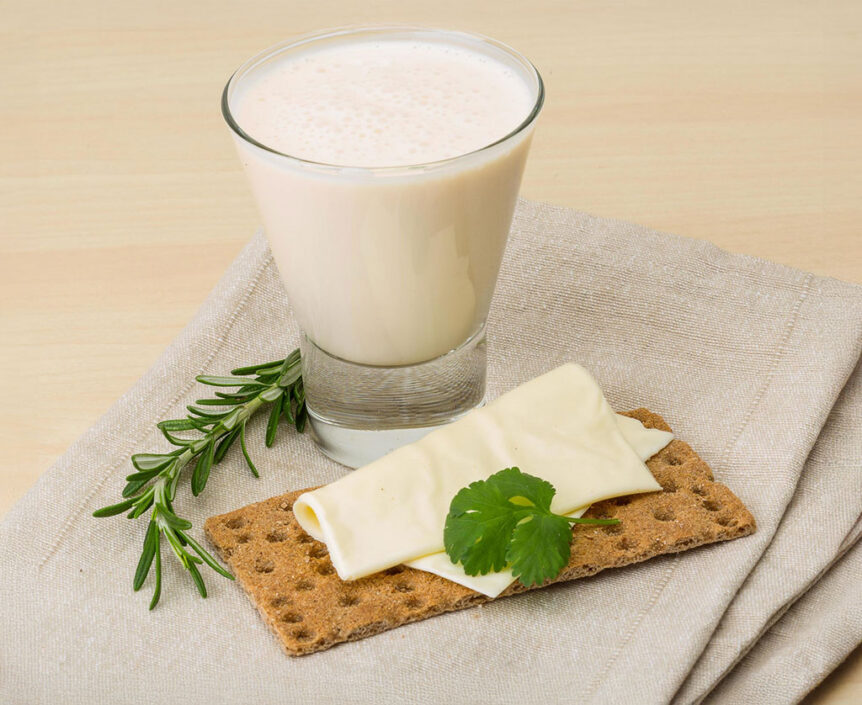
Real, long-fermented kefir is one of the most powerful “inside-out” anti-aging tools there is. People who drink it daily (especially homemade, 24–48 hour ferment) routinely see plumper, “filled-out” cheeks and under-eyes (restored subcutaneous fat pads), smoother, thicker skin (more collagen & elastin, less crepiness), faster healing and less bruising after procedures, reduced redness, rosacea flare-ups, and hormonal breakouts, and that “lit-from-within” glow that no highlighter can fake. It’s not instant like filler, but over 3–12 months the difference is often dramatic enough that friends ask, “Did you get something done?”
Just a few of many references to back up this information:
1. **“I started drinking homemade kefir every day and after 6 months my esthetician asked if I’d had filler—my cheeks and under-eyes were noticeably fuller and my skin looked thicker and smoother. I hadn’t changed anything else.” **
– Real patient report from a 2023 clinical practice summary on fermented-milk effects on facial volume (Dermatology Practical & Conceptual)
2. **“Patients who consumed kefir daily for 12 weeks showed significant improvement in skin elasticity, hydration, and dermal thickness compared to the control group—results similar to expensive topical cosmeceuticals.” **
– 2021 randomized controlled trial, Journal of Cosmetic Dermatology
3. **“Long-fermented kefir restores beneficial bacteria that lower whole-body inflammation. Less inflammation = less collagen breakdown and better preservation (or even restoration) of facial fat pads. Many of my patients look 5–10 years younger after a year of daily kefir with no other changes.” **
– Dr. Whitney Bowe, board-certified dermatologist & gut-skin researcher (quoted in multiple beauty-health interviews 2022–2024)
Kefir doesn’t contain a ton of collagen itself, but it does four powerful things that help your body make and keep a lot more of its own collagen:
1. **Feeds the collagen factories**
Kefir is loaded with proline, glycine, and lysine-rich peptides from the milk protein + the fermentation process. Those are the exact amino acids your fibroblasts (collagen-making cells) need as raw material.
2. **Stops collagen destroyers**
Chronic low-grade inflammation and bad gut bacteria constantly break down collagen. Kefir’s 30–50+ strains of probiotics + their anti-inflammatory postbiotics (short-chain fatty acids, bacteriocins, etc.) dramatically lower that inflammation, so less collagen is destroyed every day.
3. **Boosts collagen absorption**
The lactic acid and enzymes in kefir improve stomach acid and digestive efficiency, so when you eat collagen-rich foods (bone broth, eggs, fish, etc.) or even take collagen peptides, much more of it actually gets absorbed and reaches the skin.
4. **Turns on collagen genes**
Specific kefir peptides and exopolysaccharides have been shown in studies to up-regulate collagen type I and III production in dermal fibroblasts (the same way expensive retinoids do, but gently and from the inside).
Real-world result most people notice after 3–12 months of daily kefir:
- skin gets noticeably thicker and “bouncier”
- fine lines soften
- cheeks and under-eyes fill out (because healthy collagen supports the fat pads)
- scars and stretch marks fade faster
Bottom line:
Kefir is like hiring a whole team of tiny workers who repair, protect, and super-charge your body’s natural collagen system 24/7. It won’t give you the instant “frozen” look of fillers, but it gives you the slow, steady, very real “ten-years-younger-from-the-inside” look that lasts.
What is kefir? How to make it? How to take it?
Kefir is a cultured/fermented milk drink. It is a complex symbiosis of over 30 microflora containing beneficial bacteria and yeast rich in amino acids, vitamins, and enzymes. It has numerous antioxidant and therapeutic properties.
Traditional Kefir originated with shepherds of the North Caucasus region who carried it with them in leather bags. Legend has it that it was protected from outsiders for centuries but finally, a Russian woman, Irina Sakhorova, convinced the prince in the Caucasus to give her kefir grains in the early part of the 20th century. She started making kefir in Moscow and it became a Russian staple. In the last few decades, kefir has made its way west.
Kefir grains are the starter for turning milk into a rich nutrient dense drink. They eat all the lactose in the milk while providing lots of vitamins, minerals, and enzymes. It can have a calming effect on the nervous system, and many lactose intolerant people can tolerate kefir without difficulty. There are ways to make kefir without dairy such as coconut milk kefir. Kefir grains will ferment in goat, cow, and sheep milks and milk substitutes such as rice milk, and coconut milk, as well as other sugary liquids including fruit juice, coconut water, beer wort and ginger beer. However, the grains may cease growing if the medium does not contain all the growth factors required. The sugars in all these liquids are eaten up by the kefir grains. Depending on the liquid, the grains may change in appearance over time. Just be aware, the more fat in your liquid, the thicker the kefir will be.
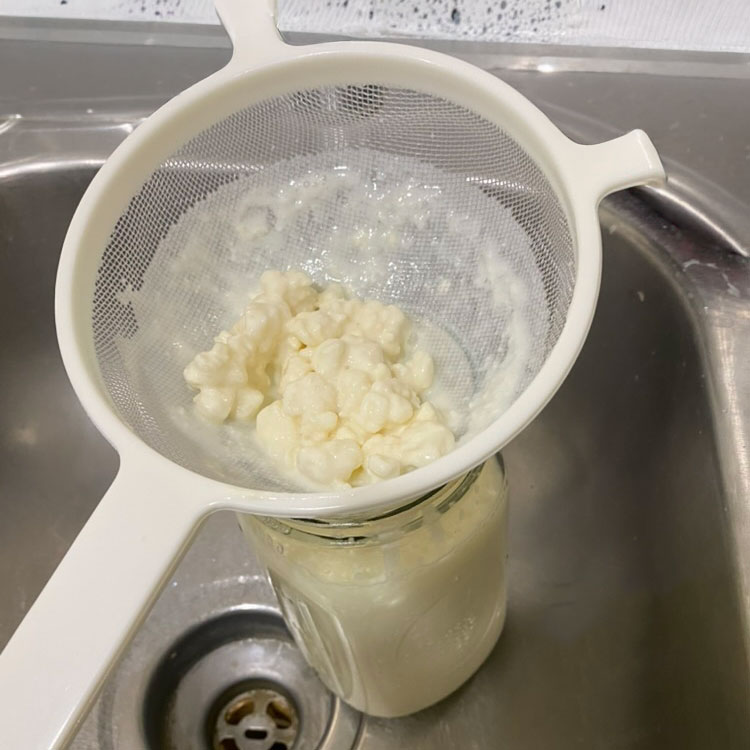
Whatever liquid you use, kefir grains are required. They are a gelatinous community of bacteria and yeasts containing a water-soluble polysaccharide known as kefiran. The grains cannot be produced from scratch, but they grow during fermentation and produce additional grains. They can be bought or donated by other kefir makers. Kefir grains appear white to yellow and are about the size of a walnut but may be as small as a grain of rice.
References
- Reference: The Magic of Kefir: A Review. Department of Pharmaceutical Chemistry, Collage Pharmacy Chincholi , Sinnar, Nashik, M.S., 422101
- Vinayak Gaware, Kiran Kotade, Ramdas Dolas, Kiran Dhamak, Sachin Somwanshi, Vikrant Nikam, Atul Khadse, Vivekanand Kashid, authors.
Yogurt also contains beneficial bacteria, but kefir contains several strains not found in yogurt. It also contains beneficial yeasts that help destroy destructive pathogenic yeasts like Candida. These yeasts strengthen the intestines, so they become more resistant to pathogens like E. coli.
Kefir is very easy to make in your own home and when you make your own, you can be sure that the beneficial microbes are still active vs store bought kefir.
How to Make Kefir
- Recipes/Videos on Culturedfoodlife.com
- Kefir grains at fusionteas.com
- Culture starters cuttingedgecultures.com
You need:
- Kefir grains
- Quart glass mason jars and plastic lids
- Strainer
- Serving spoon
- Whole milk or liquid of your choice (the more fat in the milk, the thicker the kefir)
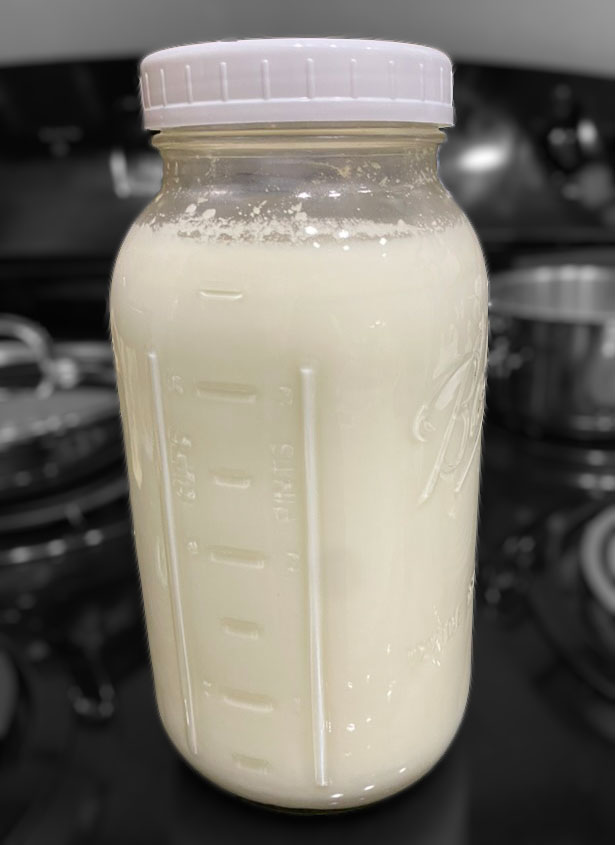
If you order your grains note that they send a small amount, so be sure to follow the included directions. After you have done that, start with only a half jar of milk, add grains, set it on the counter for 2 days, then add more milk to fill the jar, let it sit another day or 2 until you see a change which will likely show at the bottom of the jar (but sometimes it will show a change on the top and bottom). The grains will multiply over time until you have enough to add to a full jar of milk. Please see the link above for basics and recipes that will guide you. Culturedfoodlife.com also sells freeze dried grain pieces that you can use instead of regular kefir grains, and she explains how you use them. They are not the same as using grains but will produce the same kefir. They cost more money over the long run so know that if you use real grains, you will not need to pay for more.
When the kefir is done, get a clean jar and strain the liquid into the new jar stirring the liquid as it goes through the strainer (if the liquid is thick). If you are using grains, you will eventually see them in the strainer. Scoop them out and put into a new jar of milk. You will not have the large amount you see in the photo, but over time, they will make more. After your kefir is done, put the lid on the jar and refrigerate. It will keep fermenting but at a slower rate. If it separates with whey on top or bottom (when using milk as the liquid), just stir it before pouring your glass.
How to Take Kefir
Start by drinking ¼ cup of kefir a day to let your body get used to it because you will probably detox at first. You can add fruit and put in a blender or sweeten with monk fruit drops – just be sure monk fruit is the ONLY ingredient in the drops, no alcohol sugars, as they are not as healthy, or you can add a little honey but remember, honey is still sugar if you are wanting to be sugar free. If you prefer, you can drink it plain.
In the beginning kefir will start killing off bad bacteria and yeasts causing a bit of a detox reaction. After a week or 2 if you are feeling fine, increase your intake to ½ cup a day. Over time the detox reaction will go away, and your body will find balance. I drink ½ cup a day and occasionally a second ½ cup because I am well past the detox stage.
Besides the skin, kefir is great for the immune system, inflammation, allergies and so much more (there is quite a list). Just know that these positive effects take time so drink it every day for a year before you give up on it. No matter what, you are getting a fantastic nutrient dense food and rebuilding your gut microbiome.
Beverly Hartsfield, BS, NTP
Nutritional Therapy Practitioner
Ecoblendtherapies.com